Automotive DMS: Document Management System vs Dealer Management System
What type of DMS do you need in automotive? Learn the differences between Document Management Systems and Dealer Management Systems, plus integration strategies.
Document Management System vs. Dealer Management System
Let’s clear up the confusion once and for all. Here’s exactly what each system does and why your dealership might need both:
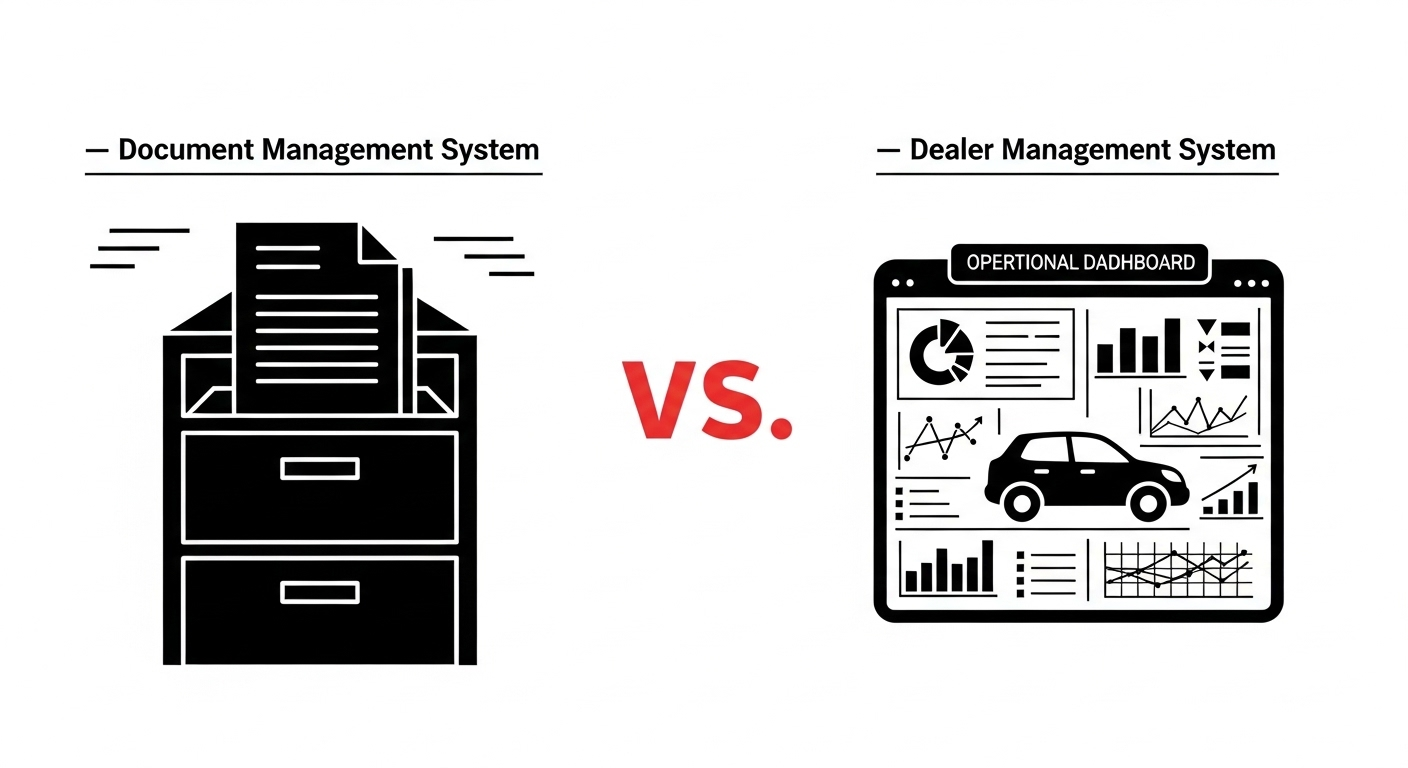
Document Management System (Document DMS)
A Document Management System (DMS) is your digital filing cabinet on steroids. It captures, stores, organizes, and secures all your dealership’s paperwork, from sales contracts and service records to HR files and vendor agreements.
Think beyond basic file storage.
Your document DMS includes optical character recognition (OCR) to make scanned documents searchable, workflow automation to route approvals automatically, and security features that keep sensitive customer data protected.
The system’s primary purpose is to eliminate document disorganization. It helps you with meeting compliance and retention requirements and gives your team instant access to any document they need.
Enterprise Content Management (ECM) systems also get brought up in the discussion. They handle a broader range of content types.
To make sure you fully understand the distinctions between all systems, check out our post on DMS vs. ECM.
Dealer Management System (Dealer DMS)
A Dealer Management System is the backbone of your dealership.
Think of it as an employee who keeps a perfect record of everything: it manages inventory, tracks sales processes, handles service appointments, processes financing, and connects all your departments through integrated workflows.
Your dealer DMS knows which vehicles are on the lot, tracks customer interactions from first contact to final sale, manages service histories, and integrates with manufacturer systems for incentives and warranties.
This system focuses on running the business side of your dealership rather than managing the documents that business generates.
Side-by-Side Comparison
This table summarizes the key differences between the two DMSs.
Feature | Dealer Management System | Document Management System |
|---|
Primary Purpose | Operate dealership sales and service | Organize and secure documents |
Industry Focus | Automotive dealerships exclusively | All industries, including automotive |
Document Organization | Basic file attachments | ✓ Advanced categorization, search, workflow |
Compliance Management | Industry-specific regulations | ✓ Broad compliance (GDPR, retention policies) |
Integration Needs | Manufacturer systems, F&I tools | CRM, accounting, existing business systems |
Typical Cost | $300–800+ per user/month | $15–50 per user/month |
Remember, these systems aren’t interchangeable, although they are both indispensable.
They complement rather than compete with each other. Your dealer DMS runs operations, while your document DMS handles the paperwork those operations create.
Why Dealerships Need Both Document and Dealer Management Systems
Modern dealerships generate massive amounts of documentation that dealer management systems simply weren’t designed to handle effectively.
Your dealer DMS excels at tracking vehicle sales but struggles with organizing the contracts, financing documents, and compliance records that sale creates.
Here’s where the gap becomes expensive: when your sales team can’t quickly locate a signed contract, when HR spends hours hunting for employee certifications, or when an audit request turns into a week-long document treasure hunt.
Document management systems fill these operational gaps by providing:
Every contract, service record, and administrative document lives in one searchable location instead of being scattered across departments, filing cabinets, and individual computers.
Different document types have different retention requirements.
Your system automatically applies appropriate policies and alerts you before important documents expire or need renewal.
Rather than replacing your existing systems, a document DMS connects with your dealer management system, CRM, and accounting software.
It creates a unified information ecosystem so that your employees don’t have to switch between applications or route documents through multiple insecure pathways before getting them where they need them.
Customer financial information, employee records, and proprietary manufacturer data get protected with encryption, access controls, and detailed audit trails that satisfy both internal policies and external regulations.
DMS are designed to have bank-level security, and one of the top features they offer is the file check-in/check-out with version control and granular security settings.
Benefits of Using Document Management Systems in Dealerships
Implementing document management transforms dealership operations in measurable ways:
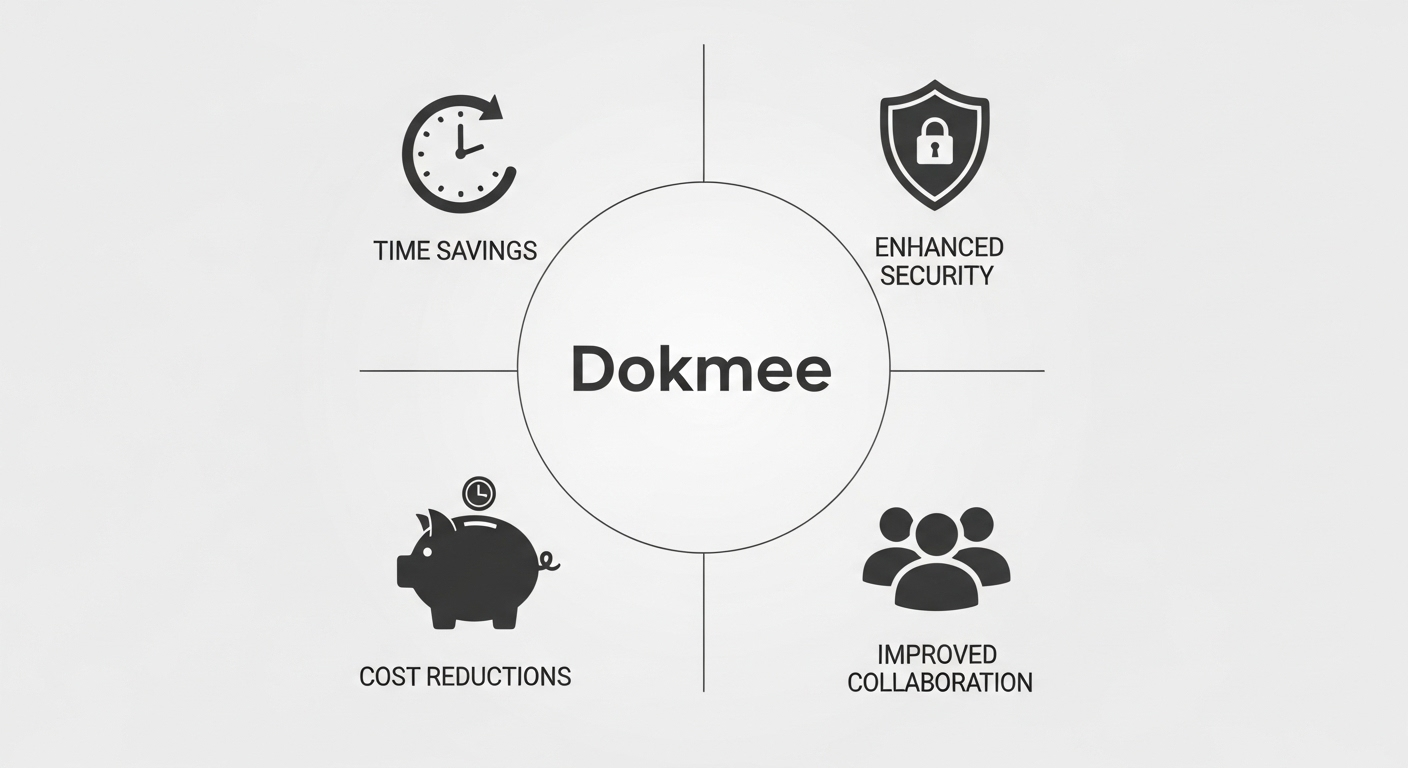
Your employees likely spend about [1.8 hours per day](https://www.crownrms.com/insights/your-employees-are-spending-hours-looking-for-documents-why/#:~:text=It’s easy to underestimate the true impact all,25%25 of an employee’s working day simply vanishes) searching for documents. OCR-powered search capabilities mean finding any document takes seconds instead of minutes or hours.
This frees up capacity for customer-facing activities, which are bound to propel your ratings.
Digital document storage eliminates physical filing systems, which grow increasingly costly to buy and maintain, depending on your dealership’s size. This makes up for money spent on physical storage, reduces copying costs, and document recreation.
Within the first year, you’ll notice a huge reduction in administrative expenses.
DMS are designed with bank-level security in mind.
Solutions like Dokmee come with role-based access controls that let you define who gets to see what. This ensures that sensitive customer information stays protected.
The audit trail feature, i.e., a detailed record of file actions, satisfies regulatory requirements, too. Essentially, security breaches become virtually impossible when documents require authentication to access.
A DMS is designed to improve team collaboration to its full potential.
Service advisors can instantly access vehicle history when customers call, sales managers can review deals from any location, and F&I teams can process contracts without waiting for physical paperwork to move between departments.
When staff can quickly access complete customer histories, service records, and purchase information, every interaction becomes more informed and efficient.
This reflects positively on your dealership. Providing phenomenal customer service will make your clients happy, who, in turn, will leave positive reviews and pull more customers your way.
Real-World Use Cases of Document Management Systems in Dealerships
With the benefits out of the way, let’s examine specific scenarios where document management transforms dealership operations:
Use Case 1: Sales Contracts and Financing Documents
A busy dealership processes hundreds of vehicle sales monthly. Each sale generates multiple documents: purchase agreements, financing contracts, trade-in paperwork, extended warranty forms, and manufacturer incentive applications.
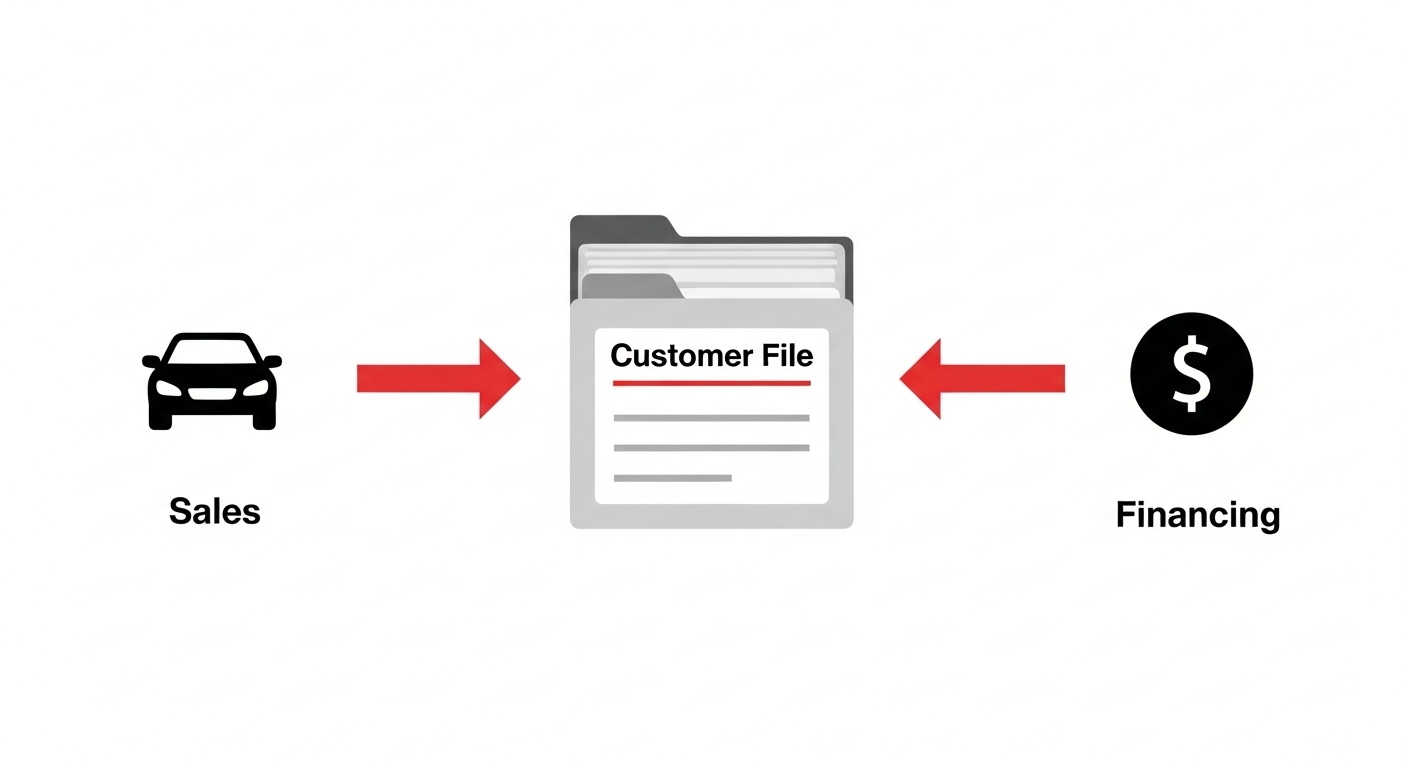
The challenge is that sales contracts get misfiled, financing documents disappear during the approval process, and customers call asking for copies or paperwork that takes hours to locate. F&I managers end up wasting time recreating documents instead of closing deals.
What can a DMS do in this case?
Automated capture: Documents scan directly into the system with OCR extracting customer names, VIN numbers, and contract dates. This feature is called “document capture.”
Intelligent routing: Financing paperwork automatically flows to the right lenders based on preconfigured rules
Instant retrieval: Any team member can locate complete customer files in seconds using name, VIN, or contract number
Audit trail: Complete history of who accessed documents and when, satisfying lender and regulatory requirements
This cuts contract processing time by over half and improves customer satisfaction due to faster service. F&I compliance also becomes automatic rather than manual.
Use Case 2: HR and Employee Records Management
Dealerships employ diverse teams that require various certifications, training records, and compliance documentation.
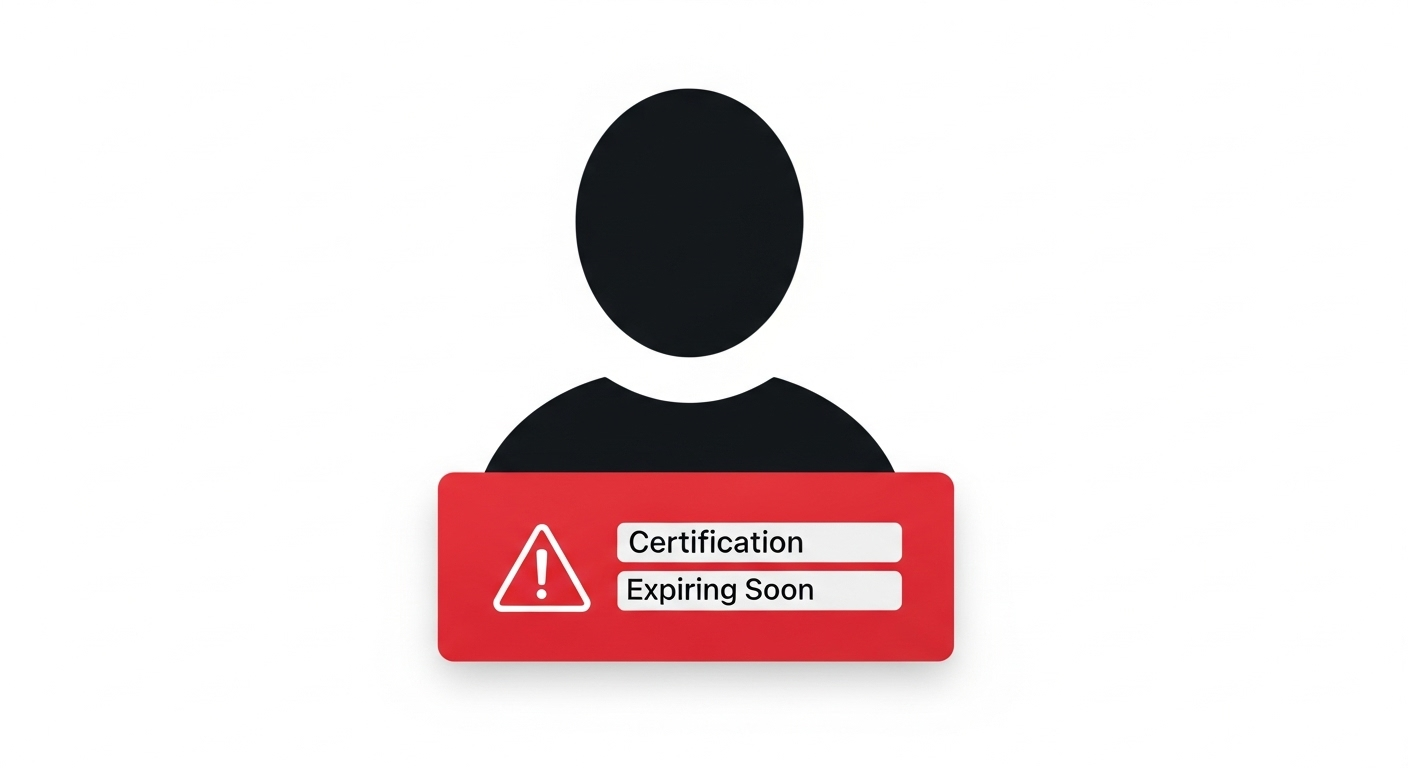
For example, technicians need ASE certifications, sales staff require manufacturer training certificates, and all employees have onboarding paperwork and performance reviews.
The problem is that employee certifications expire without notice, training records can get lost during staff transitions, and HR audits become inane manual processes that involve multiple filing systems and departments.
This is how a DMS can save the day:
Certification tracking: Automatic alerts when employee certifications approach expiration dates
Training integration: Digital certificates from manufacturer training programs automatically import and organize
Onboarding automation: New employee paperwork follows standardized workflows with automatic reminders for missing documents
Performance management: Review cycles trigger document requests and approvals without manual intervention
With a DMS, certification timelines stay on track, HR processes become more manageable, and audit prep becomes routine rather than reactive.
Use Case 3: Marketing and Vendor Document Control
Dealerships manage many relationships, from manufacturers and advertising agencies to parts suppliers and service vendors. Each partnership brings its own documents: contracts, warranty records, co-op approvals, and compliance certificates.
Problems arise when your co-op advertising claims get denied due to missing approvals, vendor contracts expire unnoticed, and worse, warranty claims get rejected for lack of proper documentation.
This pushes your marketing team into recreating campaigns instead of building on previous successes.
A DMS in this case can help in many ways. Here are some examples:
Vendor portal integration: Suppliers upload certificates and compliance documents directly to designated folders
Approval workflows: Marketing materials route through manufacturer approval processes automatically
Contract management: Renewal alerts and version control guarantee current agreements are always accessible
Campaign archives: Successful marketing materials become searchable templates for future campaigns
These changes will help your co-op claim approval rates skyrocket. Vendor compliance will become proactive rather than reactive, and your team will be able to launch marketing campaigns at a faster rate thanks to the reusable asset libraries.
Can Dokmee Serve as Your Automotive Document Management System?
Absolutely.
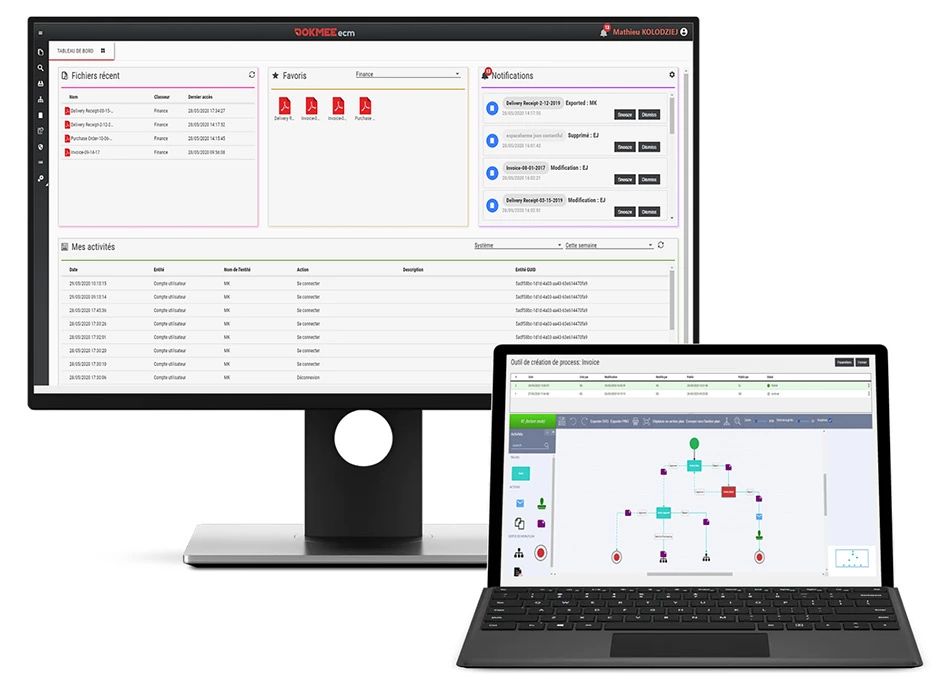
While Dokmee can’t replace your dealer management system’s operational functions (inventory tracking, CRM capabilities, or manufacturer integrations) it excels as the document organization and compliance backbone that every modern dealership needs.
Dokmee has a proven track record across all industries and brings many advantages to your dealership, including
Industry-agnostic flexibility
Seamless integration capabilities
Advanced security features
Cost-effective implementation
The smart approach is to use your dealer management system for what it does best (running dealership operations) while benefiting from Dokmee’s document management capabilities to organize, secure, and simplify all the paperwork those operations generate.
Schedule Your Dokmee Demo for Automotive Document Management