How to Use a DMS for Energy Providers
A DMS for energy providers can reduce inefficiencies, improve billing accuracy and communication, and offer automated workflows.
What is a DMS in Energy Providers?
In the energy sector, DMS can be applied to two different systems depending on context.
And it is important to make a clear distinction between them as both technologies are vital.
A document management system is a software design to centralize all documents and its management into centralized file cabinets that allow you to capture, store, manage, secure, and retrieve documents or other structured data across the organization.
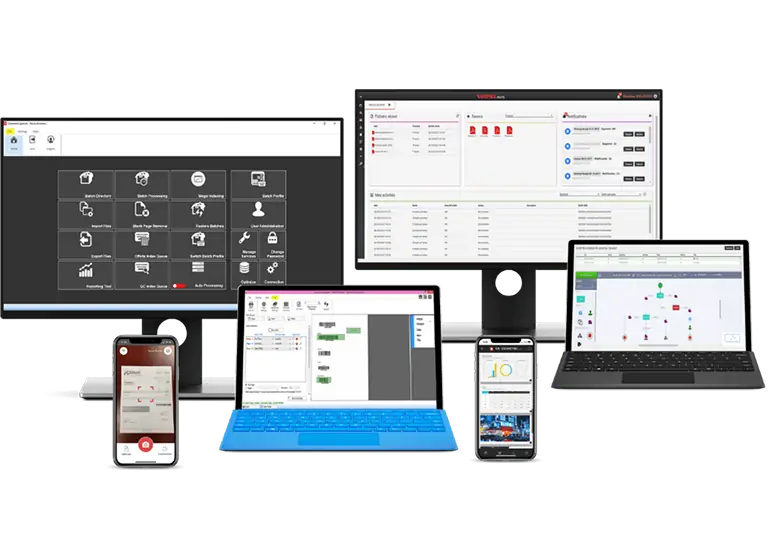
For energy providers, this includes a wide range of content such as customer contracts, billing records, compliance documentation, regulatory filings, engineering drawings, maintenance reports, meter data, and internal communications.
By replacing fragmented paper-based or siloed digital storage, a DMS improves operational efficiency, reduces errors, and ensures information is always accessible and traceable.
By contrast, a dynamic maintenance solution, also a DMS in this sector, is a system focused on asset performance and maintenance optimization.
These platforms are typically used to monitor grids, pipelines, substations, or renewable energy assets and support predictive maintenance strategies.
In this article, we will be focusing on the former, document management systems in the energy sector as a way to underpin communication, billing, compliance, and collaboration across energy organizations.
How Can a DMS Simplify Communication in Energy Providers?
Energy providers are highly regulated, document-intensive environments where communication must be accurate, timely, and secure.
A DMS acts as a single source of truth, allowing all departments, external partners, regulators, and customers to share consistent and accurate information, therefore avoiding issues.
A DMS significantly improves collaboration by allowing teams to work on the same documents simultaneously while maintaining strict version control.
Engineering, finance, operations, and compliance teams can access the most current information without relying on email attachments or disconnected file servers. External stakeholders such as contractors or auditors can be granted controlled access, ensuring transparency without compromising security.
Automated workflows further simplify communication by reducing manual follow-ups.
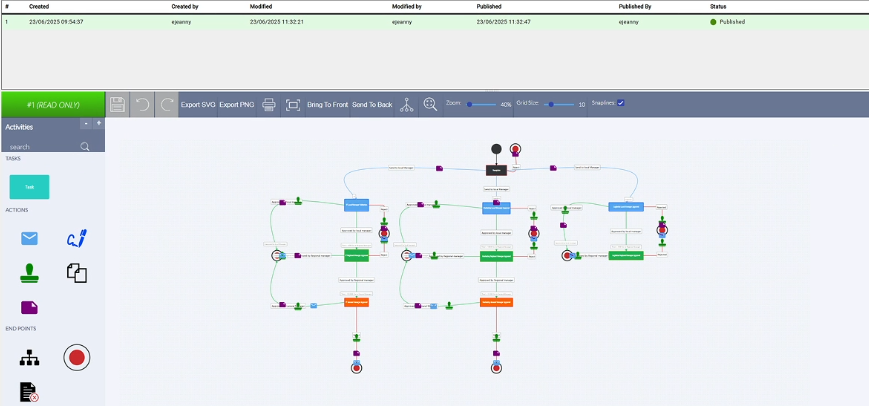
For example, payment reminders, approval requests, and contract renewals can be triggered automatically based on predefined rules.
This improves responsiveness but also helps energy providers hold predictable cash flow and avoid delays caused by missed communications.
Billing processes also benefit from centralized document management.
Invoices, usage data, contracts, and correspondence are linked within a single system, reducing errors and simplifying validation. When customers have billing questions or disputes, service teams can quickly retrieve the full history, leading to faster resolution and improved customer satisfaction.
Security and compliance are critical concerns in the energy sector.
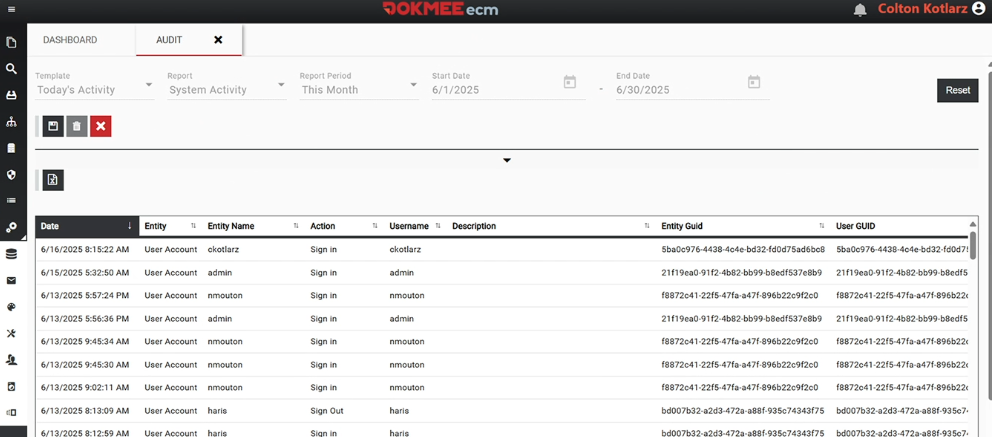
A DMS enhances data protection through role-based access, encryption, and detailed audit trails that record every interaction with a document. These capabilities help organizations meet regulatory requirements, prepare for audits, and demonstrate accountability to regulators.
Beyond communication, modern DMS platforms, such as Dokmee, support operational efficiency through advanced features such as automated process workflows, mobile access for field teams, seamless integration with Microsoft Office and Office 365, digital stamps and electronic signatures, logic-based search using metadata, and version control with defined retention policies.
Together, these capabilities reduce administrative overhead and ensure information is always accurate, secure, and easy to find.
How to Use a DMS in Energy Companies
Implementing a DMS within an energy organization requires a structured approach.
The process should begin with identifying document-heavy workflows such as billing, regulatory compliance, maintenance documentation, human resources, and vendor management.
Clear access roles and security policies must then be defined to ensure sensitive information is protected while remaining accessible to authorized users.
Legacy documents are digitized, indexed, and enriched with metadata to enable fast retrieval.
The DMS is often integrated with existing enterprise systems such as ERP, CRM, billing, or asset management platforms to create a seamless information ecosystem. Employee training and governance policies ensure consistent usage and long-term value.
In practice, a DMS supports a wide range of real-world energy use cases. In regulatory compliance management, energy providers rely on the DMS to organize permits, inspection reports, certifications, and regulatory submissions. Automated retention schedules ensure documents are preserved or archived in line with regulations, while audit logs simplify regulatory reviews.
For field operations and maintenance, technicians access safety procedures, technical manuals, and work orders through mobile DMS applications.
Completed reports, photos, and inspection results are uploaded in real time, reducing paperwork and improving coordination between field and office teams.
In customer billing and dispute resolution, a DMS centralizes invoices, contracts, meter data, and communication history. When billing discrepancies arise, customer service teams can quickly access complete records and audit trails, shortening resolution times and improving trust and transparency with customers.
Dokmee, the Best DMS for Energy Providers
Dokmee is an enterprise-grade DMS and ECM designed to support the complex, regulated, and document-intensive operations of energy providers.
It provides a secure, scalable platform that improves efficiency across billing, compliance, operations, and customer service.
Dokmee allows energy companies to centralize all critical documents within a single file cabinet, enhanced by advanced indexing and metadata search.
Automated workflows streamline approvals, billing cycles, and compliance processes, while full audit trails and enterprise-level security controls ensure regulatory readiness. Mobile access allows field and remote teams to stay connected, and seamless integration with Microsoft Office, ERP, and billing systems supports existing workflows without disruption.
With features such as a DocuSign integration, version control, and configurable retention policies, Dokmee helps energy providers reduce risk, accelerate processes, and maintain full visibility over their information assets.
Energy providers that want to modernize document workflows, improve compliance, and streamline communication can rely on Dokmee as a trusted DMS solution. Book your free demo today to discover how a secure and scalable DMS can transform your energy operations.